
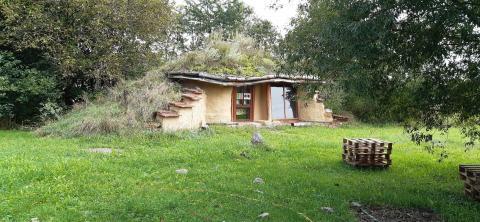
We organized a study trip within the „Strengthening and activating the small communities of the settlements in Northern Hungary” project on 24-25 August 2020 to Slovakia. Representatives, volunteers and employees of the participating small communities, NGOs visited two civil society organizations.
On the first day in Rankovce we met the Association for a Better Life, which was established in 2004. Their mission is to support the marginalized Roma communities in Eastern Slovakia and to promote their integration. The organization mobilizes local people, builds partnerships and develops members of the local community to jointly strengthen the community. Since 2010, it has been a member of the YEPP (Youth Assistance Partnership Program) which activates young people and provides Roma leadership trainings. Since 2014, at the heart of their mission, their main topic has been social enterprises, and in cooperation with ERSTE Bank, they help Roma entrepreneurs elaborate a strategy and a business plan. In four settlements (Vtáčkovce, Rankovce, Boliarov, Bačkovík) they work to support parents of children aged 0-7 and women expecting their first child, to develop and strengthen their parental cognitions and competencies. They primarily work with informal Roma women leaders who directly support 40 young mothers in segregation in caring for their children. The leaders of the organization presented its work, history, as well as the organisation's program for developing parental skills of young mothers, their housing promotion program, as well as their initiatives to help mobilize local young people of the community. They also shared how they were able to do their work during the quarantine, as facing a tough financial position due to the coronavirus pandemic. Participants not only asked questions, but also introduced their organizations and communities, and talked to local activists about common professional problems and challenges.
On the second day we visited the SOSNA Ecocentre in Hernádszentistván. At the beginning the two leaders, István Szabó, and Szilvia Szabóné presented the organization and its main activities in the form of a lecture, and described the process of achieving the establishment of the Ecocentre. Then we were shown around, and acquainted with the Ecocentre itself. SOSNA (meaning ’pine’ in Slovak), founded in 1991, is one of the oldest environmental NGO in Slovakia. The mission of the SOSNA Civic Association is to connect and activate people with the aim of supporting and implementing alternative solution models to ecological problems, primarily at local and regional level. This and similar centers are vital to set an example for people as workable, efficient and good solutions that are not only economical but also sustainable. The whole Ecocentre and its large bio garden serves as an inspiration for the visitors. Everyone can see how organic gardening works in practise. Although one of the main attractions of the SOSNA Ecological Center is the hillhouse, guests are invited to visit summer camps, lectures, seminars, trainings, tours, and to taste their farm-produced vegetables and fruits all year round. SOSNA has been headquartered here since 2010, and their local office also organizes its activities.
The participants found the visit extremely useful, asked a lot, and gained useful knowledge. They could learn about best practises for the development of parental competencies and the solution of housing problems for people living in deep poverty, in the fields of economical and ecologically sustainable construction, farming and everyday life, enabled them to apply these practices individually at home, in their work and in communities.
During the two days we had the opportunity to go on a short sightseeing tour in Kosice.
The pictures taken during the study tour are available here!
More information about the project: https://www.karpatokalapitvany.hu/en/tartalom/strengthening-and-activating-small-communities-northeast-hungary
The project entitled „Strengthening and activating the small communities of the settlements of Northern Hungary” c. EFOP-1.3.5-16-The 2016-00915 is implemented with the support of the European Union, co-financed by the European Social Fund and the Hungarian Government.
- Log in to post comments